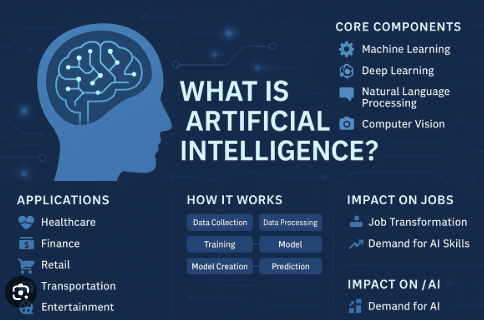
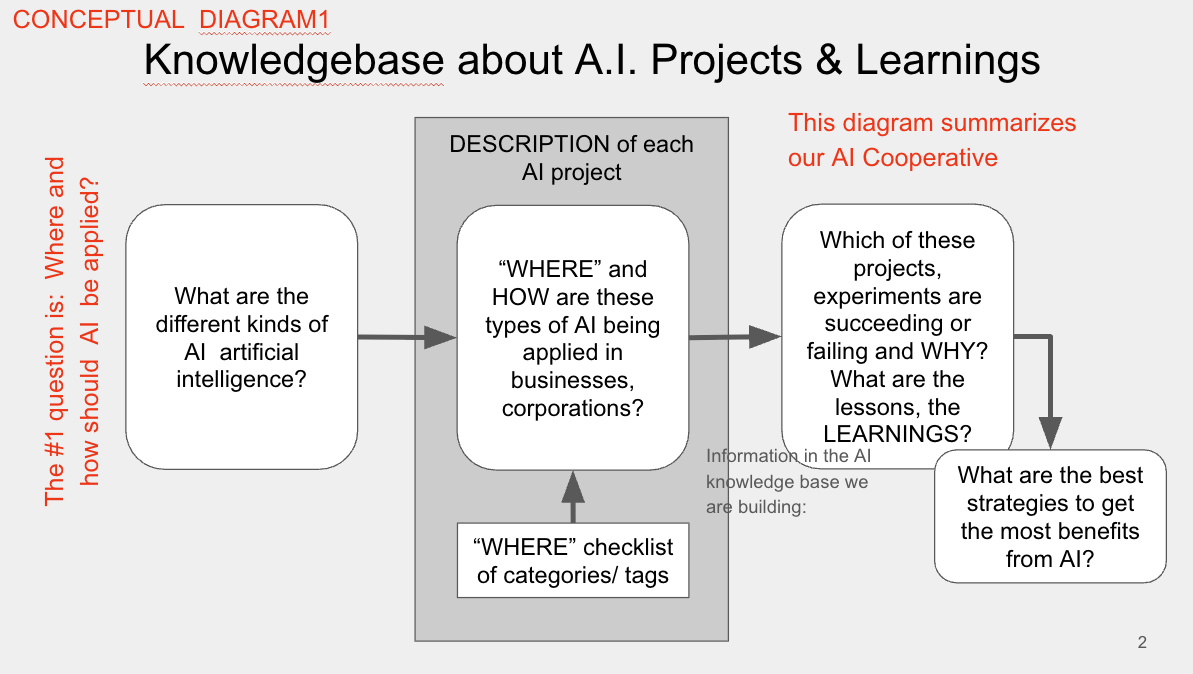
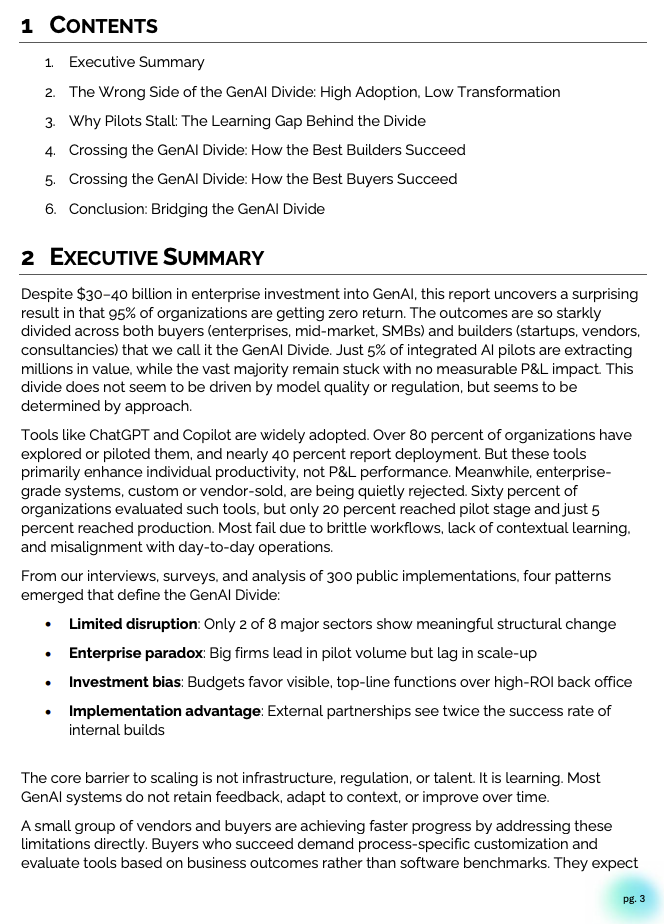
Applications of Various AI Types in Business Corporations AI is transforming corporate operations across industries, with applications tailored to specific business needs. Broadly, AI types include generative AI (GenAI) for creating content and ideas, agentic AI for autonomous workflows and decision-making, machine learning (ML) for predictive analytics, natural language processing (NLP) for text and speech analysis, computer vision for image/video processing, and physical AI for robotics and automation in industrial settings. Key areas of application include: • Customer Service and Personalization: GenAI powers chatbots and virtual assistants for real-time support. For example, companies use AI to tailor recommendations based on user behavior, like Sephora's Virtual Artist tool for virtual makeup trials or Amazon's product suggestions. Agentic AI handles complex queries in contact centers, automating responses and escalating issues. • Operations and Supply Chain: ML optimizes inventory and forecasting. Walmart uses ML for demand prediction and logistics, reducing waste and improving efficiency. Physical AI monitors equipment in manufacturing, such as Ford's computer vision for defect detection on assembly lines. • Finance and Risk Management: Agentic AI automates invoice processing, reconciliation, and fraud detection. JPMorgan Chase employs NLP in its COiN system to analyze contracts, cutting review time from hours to seconds. Predictive AI spots risks in real-time, as seen in fintech for credit scoring. • HR and Workforce Management: AI agents streamline recruitment, performance tracking, and upskilling. Deloitte's report highlights agentic AI in knowledge management and R&D, where it automates meeting summaries and action tracking. • Marketing and Content Creation: GenAI generates campaigns, designs, and code. McKinsey notes its use in drafting marketing strategies and hyper-personalization. • Healthcare and Energy: Physical AI aids in diagnostics and energy optimization. Schneider Electric uses device-based AI for HVAC efficiency, saving 5-15% on energy. In healthcare, AI supports R&D and cybersecurity. • IT and Knowledge Management: Agentic AI manages service desks and deep research, with high adoption in tech sectors like telecom. These applications are scaling rapidly, with 80% of high-performing companies using AI for growth and cost savings, per McKinsey. In 2025-2026, agentic AI is emerging as a key driver, automating workflows in finance, HR, and IT, while GenAI focuses on content and search. Successful AI Projects, Reasons for Success, and Lessons Learned Many AI projects are succeeding by delivering measurable ROI, but success rates vary—MIT reports 95% of pilots fail to scale due to poor data or misalignment. Here's a look at notable successes: • JPMorgan Chase's AI Rollout: Deployed GenAI to 200,000+ employees across 450+ use cases, saving 15M hours annually ($2B+ in gains). Success due to fraud detection, advisor support, and automated analysis; it boosted productivity by 20% through high-fidelity data flows. Lesson: Scale requires robust infrastructure and employee access. • Colgate-Palmolive's GenAI Focus: Shifted to innovation, generating measurable value in business practices. Success from focusing on small wins and appropriate tool use. Lesson: Prioritize medium-sized gains over hype. • Sanofi's AI for Investments: Guides managers to optimize spending and avoid sunk-cost bias. Success via better decision-making in pharma R&D. Lesson: AI excels at overcoming human biases. • AMD & Synopsys' Chip Design AI: Uses reinforcement learning and agentic AI to double developer productivity. Success from efficiency in tech workflows. • Horizon Power & TerraQuanta's Energy AI: AI forecasting boosts efficiency 50,000x. Success through real-time optimization. Lesson: Domain-specific AI yields massive gains. • Johnson & Johnson's Strategic AI Shift: Dropped 900 use cases for a handful of high-impact projects, improving ROI. Lesson: Focus beats fragmentation. • Google's Project EAT: Embeds AI in planning, coding, and execution for internal teams. Early success in productivity; lessons emphasize dogfooding (testing internally). Why they succeed: Clear alignment with business goals, quality data, and workflow integration lead to 18-50% efficiency gains. High performers see revenue growth and valuation premiums. Key lessons learned: • Data Quality is Critical: Poor data causes 95% of failures; invest in foundations before scaling. • Start with Strategy, Not Tech: Define roadmaps and metrics early to avoid drift. • Upskill and Experiment: Build AI-ready teams; encourage failure as learning. • Ethical and Transparent Use: Prioritize trust, governance, and in-house skills over full reliance on vendors. • Workflow Over Tools: Agents thrive when redesigning processes, not just automating tasks. • Measure and Iterate: Track ROI; 2025 showed speed alone isn't enough—focus on outcomes. Best Strategies to Maximize AI Benefits To reap the most from AI, corporations should adopt a structured approach: • Align AI with Business Objectives: Map initiatives to priorities like efficiency or growth. Present strategies to stakeholders for buy-in. • Build Infrastructure and AI Factories: Invest in platforms for rapid model development, including data centers and tools. Focus on all AI types (analytical, GenAI, agentic). • Prioritize Data Governance and Quality: Ensure clean, consistent data; this is foundational for ROI. • Upskill Workforce and Foster Superagency: Train employees to use AI thoughtfully; empower them as "AI composers" in roles like marketing or coding. • Start Small, Scale Strategically: Pilot focused projects, measure impact, and iterate. Avoid scattering efforts—pick high-value use cases. • Emphasize Ethics and Monitoring: Integrate transparency, sovereignty, and continuous assessment to build trust and adapt. Gartner's 5-step formula—evaluate, implement, manage expectations—boosts success rates. Catalog of AI Projects Here's a starting catalog based on recent examples. You can expand it with your team's awareness: 1 Sephora Virtual Artist: GenAI for personalized beauty trials; boosts engagement. 2 Amazon Product Recommendations: ML for personalization; drives sales. 3 Walmart Supply Chain Optimization: ML for inventory; reduces costs. 4 JPMorgan COiN: NLP for contract analysis; saves 360K hours. 5 Ford Manufacturing Vision: Computer vision for quality control. 6 Schneider Electric HVAC AI: Physical AI for energy savings. 7 AMD Chip Design AI: Agentic AI for productivity doubling. 8 Horizon Power Energy Forecasting: AI for market optimization. 9 Google Project EAT: Internal AI for engineering workflows. 10 Uber/Target/MLB Projects with Google Cloud: AI for operations and insights. 11 MWX_AI for SMEs: Agentic AI for marketing/ops on blockchain. 12 JPMorgan Enterprise Rollout: GenAI for fraud/advisory; $2B gains. This catalog focuses on proven, scalable projects. Let me know if you'd like to dive deeper into any! |